
Axelar Interchain Token Service: bridge taxonomy and the wrapped token problem
Thread1,074 words
Classifies bridges (native, validator or oracle based, generalized message passing, liquidity networks), lists the risk categories, then explains how Axelar's ITS issues natively fungible interchain tokens instead of bridge-specific wrapped versions. Sushi is an early adopter.
Key claims
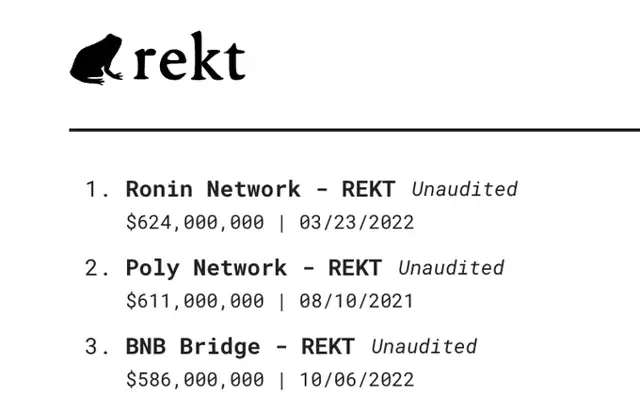
Bridges account for the top three biggest DeFi hacks
ITS targets systemic risk from wrapped tokens
SUSHI to be interoperable across Arbitrum, Ethereum, Optimism and Polygon via ITS
0/ In July @axelarcore, a leading blockchain interoperability solution, announced the launch of Interchain Token Service (ITS).
ITS will be a GAME-CHANGER for interoperability & bridging by introducing a new interchain token standard.
a 🧵 on what it is & how it works (0/32) 🌐
1/ But before we dive in, let's have a look at why something like ITS is needed in today's bridging space.
So what's the purpose of bridges? 🌉
Bridges exist to connect blockchain networks, enabling connectivity and interoperability between otherwise isolated networks.
2/ Blockchains are siloed economies with their own laws and rules (state transition function & consensus) and sometimes even their own languages.
This means there is no way for blockchains to trade and communicate with other blockchains naturally.
3/ Consequently, activity and innovation is often confined to single ecosystems, limited by the lack of connectivity and interoperability with other networks.
4/ Bridges offer a way for these isolated blockchain economies to connect with each other, establishing a transportation route between blockchains where tokens, messages, arbitrary data & even smart contract calls can be transferred from one chain to another.
5/ While there are many types of bridge designs, three mechanisms facilitate the cross-chain transfer of assets stand out. 👇
6/
🔹 Lock & mint: Lock assets on source chain and mint assets on destination chain.
🔹 Burn & mint: Burn assets on source chain and mint assets on destination chain.
🔹 Atomic swaps: Swap assets on source chain for assets on destination chain with another party.
7/ Bridges can usually be classified into one of the following buckets. 👇
8/ 🌉 Native bridges
These bridges are typically built to bootstrap liquidity on a particular blockchain, moving funds to the ecosystem.
Examples:
🔹 @Arbitrum Bridge
🔹 @0xPolygon PoS Bridge
🔹 @optimismFND Gateway
9/ 🌉 Validator or oracle based bridges
Bridges that rely on an external validator set or oracles to validate cross-chain transfers. These bridges often rely on a mint & lock/burn mechanism.
Examples:
🔹 @MultichainOrg (DO NOT USE)
🔹 @AcrossProtocol
10/ 🌉 Generalized message passing bridges
Bridges that can transfer assets, along with messages & arbitrary data across chains.
Examples:
🔹 @axelarcore
🔹 @LayerZero_Labs
🔹 @Hyperlane_xyz
11/ If you want to learn more about @axelarcore's security/trust model and how it compares to @LayerZero_Labs, check out my below thread. 👇
x.com/zerokn0wledge_/status/1677014596278968320
12/ 🌉 Liquidity networks
Primarily focused on transferring assets from one chain to another via atomic swaps. They generally don’t support cross-chain message passing.
Examples:
🔹 @ConnextNetwork
🔹 @HopProtocol
13/ For more on the bridging space and how bridges relying on light-client based state verification via zk proofs will likely change the game with regards to security/trust assumptions, have a look here. 👇
x.com/zerokn0wledge_/status/1663563684722147329
14/ But what is the problem with these solutions? 🤔
Well, unfortunately bridges are not only important, they are also prone to hacks. 🚨
Bridges account for the top three biggest hacks in DeFi (see image) and are still in an early development stage.
15/ Using any bridge carries the following risks:
⚠️ Smart contract risk
While many bridges have successfully passed audits, all it takes is one flaw in a smart contract for assets to be exposed to hacks. One prominent example is @Solana’s Wormhole Bridge.
16/ ⚠️ Systemic financial risks
Many bridges use wrapped assets to mint canonical versions of the original asset on a new chain. This exposes the ecosystem to systemic risk, as we have seen many wrapped versions of tokens be exploited.
17/ ⚠️ Counterparty risk
Some bridges use a trusted design, requiring users to rely on the assumption that validators won't collude to steal funds. The need for users to trust these third-party actors exposes them to risks like rug pulls, censorship & other malicious activity.
18/ ⚠️ Open issues
Bridges are in early stages of development. Hence there is uncertainty around how they perform in different market conditions & how unforeseen events like network-level attacks or state rollbacks impact them. This poses risks, the degree of which is unknown.
19/ But let's have a look at how @axelarcore and the Interchain Token Service fit into this.
We won't dive into the details of @axelarcore's GMP, but if you need a refresher, check my thread below. 👇
x.com/zerokn0wledge_/status/1674477862307631105
20/ What we want to focus on for the rest of this thread is ITS. 🌐
At its core, ITS is a product suite that extends tokens cross-chain, preserving their native functionality and allowing teams to easily manage supply and features.
21/ Circling back to the bridging risks outlined above, ITS primarily addresses systemic financial risks that arise from having wrapped tokens in circulation that are dependant on the issuing bridge's security.
22/ Instead of having multiple bridges that mint their own wrapped versions of a token, ITS enables entirely fungible, native token, delivering the same functionality across chains with improved security (based on @axelarcore's top-notch security model).
23/ But why are wrapped tokens a problem?
⚠️ Non-Fungibility: If a bridge is hacked & collateral is stolen, wrapped tokens lose value.
⚠️ Liquidity Fragmentation: Wrapped tokens are not fungible, fragmenting liquidity.
24/ ⚠️ Smart Contract Vulnerabilities: Wrapped tokens depend on smart contracts, and any bugs in these can result in financial loss.
⚠️ Centralization Risks: If a centralized entity manages a bridge and gets compromised, the wrapped tokens are at risk.
25/ So what are the benefits of ITS?
🌟 Fungibility
ITS supports minting & management of interchain tokens that preserve cross-chain fungibility, delivering custom functionality on multiple chains.
26/ 🌟 Multi-Chain
ERC-20 token interoperability is limited to Ethereum-based applications. Interchain tokens on the other hand support interconnected applications that span all EVM-compatible ecosystems.
27/ 🌟 Simplicity
Teams can quickly deploy & easily manage interchain tokens with low dev overhead. The product suite includes smart contracts & an SDK to automate otherwise complex dev tasks.
28/ One of the first deployment partners is the popular AMM DEX @SushiSwap, leveraging the above mentioned benefits. 🍣
@SushiSwap plans to utilize the ITS to facilitate seamless interaction of its native token across multiple chains.
29/ The initial deployment will ensure interoperability of $SUSHI across Arbitrum, Ethereum, Optimism, and Polygon, allowing @SushiSwap to manage its multi-chain deployments more efficiently through @axelarcore.
30/ Jared Grey (Sushi Head Chef) nicely outlined why ITS is a game-changer for Sushi:
“Currently, there are many bridged versions of $SUSHI that lack fungibility & carry bridge risk. With interchain tokens, Sushi can achieve true cross-chain interoperability, simply & securely.”
1 more image on X
What came next · since 06 Sep 2023
Show how the covered asset moved
This explainer walks through how things work without making a call on the token, so price moves since publication are shown as market context.
Mentioned for context
Since then
Zero has written 9 more pieces on Axelar since this one.
- Axelar on-chain data: 64 chains, GMP dominance and cross-chain volumeOn Axelar
- Axelar interchain dApps that could airdrop, and AXL staking up 26MOn Axelar
- Interoperability guide v2: messaging, transport, bridges and proof layersOn Axelar
- The Ultimate Interoperability Guide: landscape of cross-chain protocolsOn Axelar
Daily closes in USD from DefiLlama and Yahoo Finance. Only a bullish or bearish call in a thesis or market take is tracked; explainers, lists, maps and mentions are neutral context. Not financial advice.