
Scaling Ethereum on rollups: sequencers, fraud proofs, validity proofs and DA
Thread1,082 words
Market since$ETH+26%since this pieceHow it played out ↓Long explainer comparing monolithic scaling, sharding and parachains with rollups. Covers sequencers, optimistic fraud proofs, zk validity proofs and why data availability, via danksharding blobs, limits rollup throughput.
Key claims
Rollup throughput is capped by the data availability layer
Optimistic rollups need at least one honest full node
Rollups only need one live sequencer at a time
0/ Can we still make it?
Yes. Do research & prepare for the next cycle. Now is the time in which builders thrive & new narratives take shape
A big narrative next cycle will be scaling #Ethereum on #rollups, so be ready
A 🧵 on scaling @Ethereum on rollups (0/33)
1/ First of all, what are #rollups and why do they matter?
$ETH
2/ Increasing the scalability of blockchains has long been a main topic in the space. Originally, the key idea behind decentralized, permissionless & trustless networks was to have a culture of users verifying the chain, as for example is the case with #Ethereum
3/ In order to scale throughput, some alternative L1 blockchains have decided to go with a more centralized network where users have to trust a smaller number of validators with high-spec machines, sacrificing decentralization & security for scalability
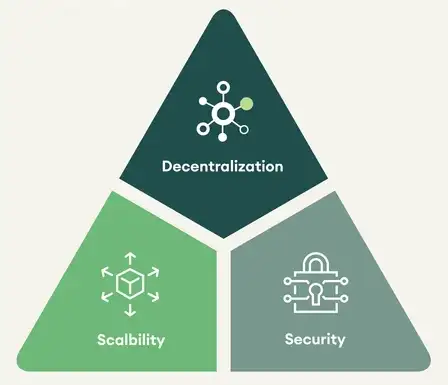
4/ This trade-off resembles the blockchain trilemma, which addresses the challenges developers face in creating a blockchain that is scalable, decentralized and secure, without compromising on any aspect
5/ Another popular scaling technique is to break the network into multiple chains (shard chains), with communication protocols between them
6/ This provides high scalability, as the computational load can be spread across multiple chains. It also maintains a higher degree of decentralization as each of these chains will still be accessible for verification or usage by the average user
7/ However, #sharded networks tend to make significant compromises on security, as the validator set is being split up into subnets between multiple chains
8/ While more naive variants of sharding have different validator sets for the different chains, more sophisticated variants have dynamic subnets. But regardless, the split validator set is less secure by definition
9/ The next idea was to take the multiple chains approach, but enable shared security across all chains by posting fraud proofs from each shard chain to a central security chain
10/ @Polkadot started with this model, with @Polkadot’s shards (a.k.a. #parachains) are application-specific and #parachain operators can customize each chain within the specifications of the overall network
11/ #Rollups take this to the next level. Rollups are a scaling solution in which transactions are processed off-chain (on L2) and rolled up into batches
12/ Sequencers/relayers collect transaction data on the L2 and submit the data to a smart contract on #Ethereum L1 that enforces correct transaction execution on L2 and stores the transaction data on L1, inheriting the security of the #Ethereum base layer
13/ So now what were essentially shards or #parachains are completely decoupled from the network and devs have a wide open space to develop their #L2 “chain” however they want
14/ Moreover, devs are still able to use the #Ethereum L1’s security by communicating through arbitrary smart contracts developed in a way that is optimized for the specific rollup
15/ Also, a #rollup does not need a validator set of its own. A rollup system only needs to have a set of sequencers, with only one sequencer needing to be live at any given time
16/ With optimistic #rollups for example, at least one honest full node is needed to report fraud, so there’s some pressure to keep a full node accessible
17/ However, with weak assumptions like this, rollups can actually run on a small set of high-spec server-grade machines, allowing for great scalability
18/ Instead of consensus mechanisms, #rollups can also have coordination mechanisms with rotation schedules to rotate sequencers accordingly, thereby increasing security & reducing the time the high-spec machines need to be online
For more info see:
polynya.medium.com/brainstorming-sequencer-consensus-mechanisms-d7304bae4765
19/ Generally, there are two types of #rollup systems. The before-mentioned optimistic rollups are characterized by having a sequencer node that collects transaction data on L2 and submits this data alongside the new L2 state root to $ETH L1
20/ In order to ensure that the new state root submitted to $ETH L1 is correct, verifier nodes will compare their new state root to the one submitted by the sequencer. If there is a difference, they will begin what’s called a fraud proof
21/ If the fraud proof’s state root is different from the one submitted by the sequencer, the sequencer’s initial deposit (a.k.a. bond) will be slashed. The state roots from that transaction onward will be erased and the sequencer will have to recompute the lost state roots
22/ #zkRollups on the other hand rely on validity proofs in the form of zero knowledge proofs (e.g. #SNARKs or #STARKs). A relayer collects transaction data on L2 and is responsible for generating the zk proof
23/ The #zk proof the relayer computes reports only the changes in #L2 state and provides this data to the L1 smart contract in the form of a verifiable hash. Similar to sequencers in optimistic rollups, relayers have to stake a bond in the smart contract
24/ Rollups play an especially important role in #ETH2’s rollup-centric roadmap. Along with proof of stake, the central feature in $ETH 2.0 design is sharding. $ETH 2.0 introduces a limited form of #sharding called “data sharding”
hackmd.io/@vbuterin/sharding_proposal
25/ As per $ETH's #rollup-centric roadmap, the shards would store data & attest to the availability of ~250 kB sized blobs of data. This availability verification provides a secure and high-throughput settlement & data availability layer for #L2 protocols such as rollups
26/ Through #ETH2’s data sharding, #Ethereum aims to address the data availability problem, which refers to the question how peers in a blockchain network can be sure that all the data of a newly proposed block is actually available
27/ If the data is not available, the block might contain malicious transactions which are being hidden by the block producer. Even if the block contains non-malicious transactions, hiding them might compromise the security of the system
28/ This data availability problem is especially prominent in the context of #rollup systems. It is very important that sequencers can make transaction data available, as the rollup needs to know about the state and account balances. This also introduces limitations to #rollups
29/ Because even if the sequencer were an actual supercomputer, the number of transactions per second it can actually compute will be limited by the data throughput of the underlying data availability solution/layer it uses
30/ If the data availability solution/layer used by a rollup is unable to keep up with the amount of data the #rollup’s sequencer wants to dump on it, then the sequencer (and the rollup) can’t process more transactions even if it wanted to
6 more images on X
How the covered assets moved · since 19 May 2022
Prices as of 23 Oct 2026This explainer walks through how things work without making a call on the token, so price moves since publication are shown as market context.
Covered in this piece
Since then
Zero has written 26 more pieces on Ethereum and $ETH since this one.
- 2025 chain revenue ranking: Solana, Hyperliquid, Tron and EthereumCovers $ETH
- New vs returning wallets across Ethereum, Solana, NEAR, Polygon and SuiCovers $ETH
- ETH rally market structure: funding-dependent liquidity and rented depthCovers $ETH
- ETFs and ETH structural demand: supply math behind the 2.15x absorptionCovers $ETH
Daily closes in USD from DefiLlama and Yahoo Finance. Only a bullish or bearish thesis is read as a call; explainers, maps and mentions are context. Not financial advice.